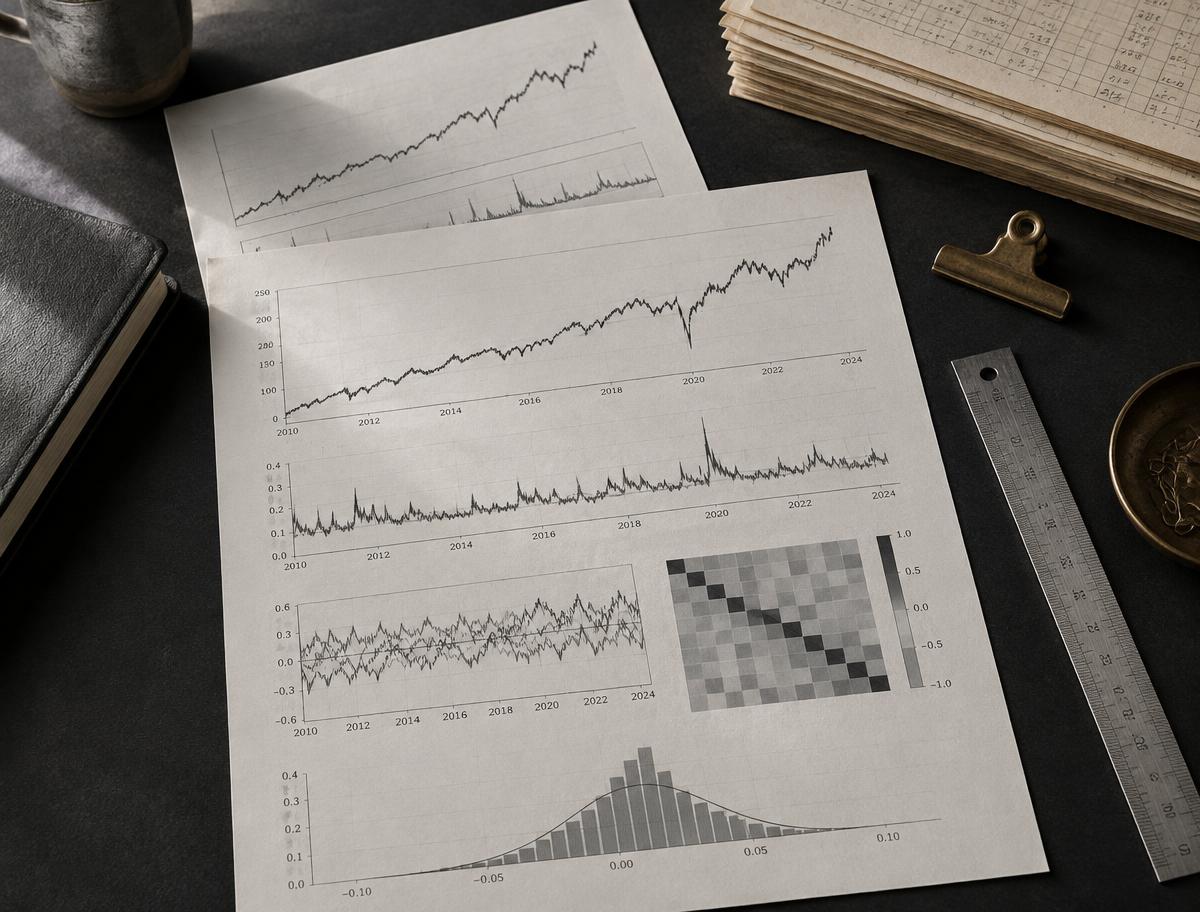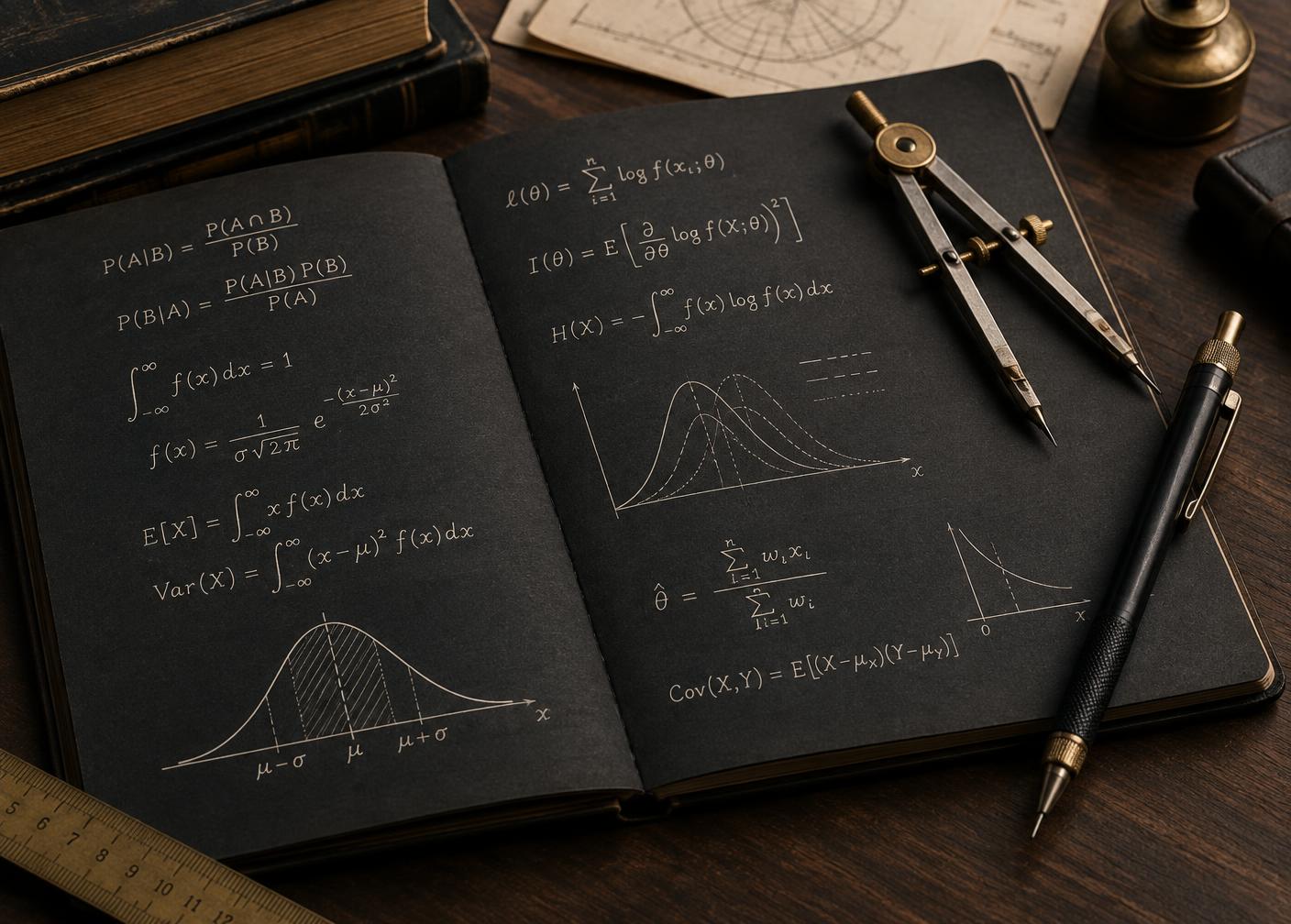
A model is not a crystal ball. It is a precise way to say what we believe, what we have observed, and where those two things might disagree. However - if a model is good, then you can use the model to predict the unseen, which turns a model to become a crystal ball.
Probability lets us reason without pretending to know the future. A distribution describes a range of possible outcomes, but its shape depends on the assumptions we choose to make. Before asking whether a forecast is accurate, it is worth asking what world the forecast assumes.
This distinction is easy to lose when a model returns a single confident-looking number. An estimate of risk is still conditional: on the data, on the chosen model, and on the ways tomorrow may differ from yesterday.
The point of a model is not certainty. It is clarity about what remains uncertain.
In mathematical engineering, usefulness rarely comes from complexity alone. A simple model with assumptions that can be examined and tested can be more valuable than a sophisticated one whose failures are difficult to explain.
The work is not to eliminate uncertainty. It is to make uncertainty legible enough that better decisions become possible.